Most homeowners assume that once fall arrives, tree care is done until spring, but Along Colorado's Front Range, winter can be tough on trees even when the calendar says late fall. Between bright sunshine, sudden temperature drops, dry winds, and heavy snows, trees in Westminster and neighboring communities face very different stressors than they do in summer. Because it takes decades for a great tree to mature, a little seasonal care now goes a long way toward keeping your landscape healthy and safe.
At Wild Man’s Tree Service, we know firsthand that healthy trees mean fewer hazards and better spring growth. Here are the three biggest winter risks, and exactly how you can protect your trees from each one.
1. Don't Forget Winter Watering—Especially for Evergreens and Young Trees
Many homeowners pack away their watering gear once fall arrives, but Front Range winters are notoriously dry. Evergreens hold onto their needles all winter and continue losing moisture, while newly planted trees and shallow-rooted varieties have smaller root systems that dry out faster.
What to do:
When extended dry stretches happen without snow cover, water on a mild day when temperatures are above 40°F and the ground isn’t frozen. Water slowly around the root zone (extending out toward the drip line) during the warmer part of the day so moisture can soak in before temperatures drop overnight, and disconnect your hose.

2. Guard Against Sunscald, Frost Cracks, and “Mulch Volcanoes”
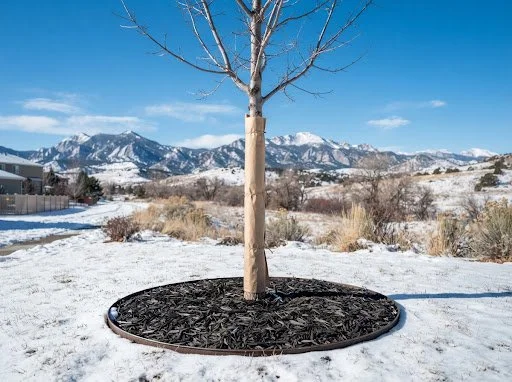
Bright winter sun hitting a tree trunk can warm the bark, and when rapid cooling sets in, thin-barked young trees—such as maples, honeylocusts, lindens, and ashes—can suffer sunscald or frost cracks. Root zones also benefit from insulation against temperature swings.
What to do: Consider wrapping the trunks of susceptible young trees with commercial tree wrap up to the lowest branches, and remember to remove the wrap in spring so moisture and pests aren’t trapped against the bark. Around the base, keep a 2- to 4-inch layer of organic wood chip mulch spread in a wide, even ring—pulled back a few inches from the trunk rather than piled up like a volcano, which can hold excess moisture against the bark and invite rodents.
3. Watch for Structural Hazards Before Heavy Snow Arrives
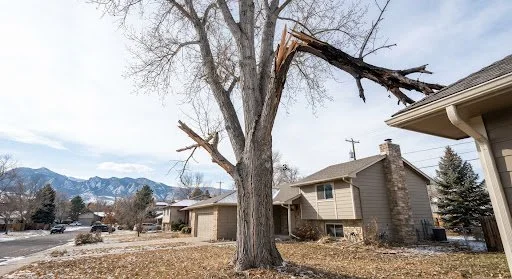
Heavy, wet snow and gusty winds put extra weight on deadwood, weak branch attachments, and limbs hanging over roofs, driveways, walkways, or power lines. While dormant/late winter is often ideal for many routine pruning goals, addressing clear hazards early helps prevent storm damage.
What to do: Walk your yard after wind or snow and look for cracked limbs, hanging branches, deadwood, or leaning trees. Avoid heavy DIY pruning on large limbs or anything near power lines or structures—leave high or hazardous work to a trained, insured tree crew.
Need a Hand With Your Trees? Let the Wild Man Team Take a Look!
Catching winter stress or a weak limb early can mean the difference between a simple seasonal checkup and costly storm damage. Whether you want a seasonal checkup, pruning, hazardous limb removal, or storm clean-up in Westminster or nearby Front Range towns, give Wild Man’s Tree Service a call today. We’re always happy to help you care for the trees you love. Call 303-943-7567 to schedule a seasonal checkup.